
Dave Gershgorn is a writer covering monitors, laptops, and tablets. He is a certified display calibrator through the Imaging Science Foundation.
FYI
Apple has announced new MacBook Pros with M5 Pro and Max processors, along with new MacBook Air models with the M5 processor. We’ve added more information to our What to look forward to section.
March 2026
The best Mac laptop for most people is the 13-inch MacBook Air with Apple’s M4 processor.
The 13-inch Air is fantastic for browsing the web, working on documents, coding, and light photo and video editing. But if you’re itching for a bit more power to code, to run demanding creative apps, or even to play indie games that have come to the Mac, we recommend the 14-inch MacBook Pro with the M5 chip.
We still recommend the M1 MacBook Air as a budget MacBook pick. This fast, reliable laptop costs just $600, which makes it the most affordable MacBook.
Everything we recommend
Top pick
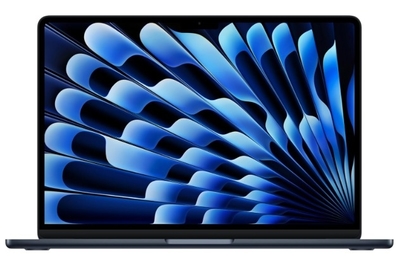
A sleek design and an improved webcam
Apple MacBook Air (13-inch, M4, 2025)
The M4 MacBook Air is a slim, powerful Apple laptop that has a notably upgraded 12-megapixel webcam.
Budget pick
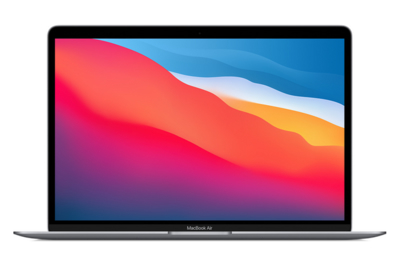
Performance for a great price
Apple MacBook Air (M1, 2020)
The M1 MacBook Air has a comfortable keyboard, good performance, and a reasonable amount of storage—things that haven’t always been true of previous MacBook Air models.
Upgrade pick
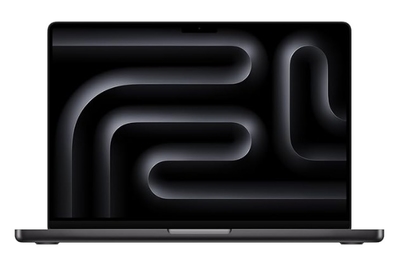
Better performance, for a price
Apple MacBook Pro (14-inch, M5)
The M5 MacBook Pro is a luxe upgrade if you want a faster processor, a better screen, and more ports.
Top pick
A sleek design and an improved webcam
Apple MacBook Air (13-inch, M4, 2025)
The M4 MacBook Air is a slim, powerful Apple laptop that has a notably upgraded 12-megapixel webcam.
Recommended configuration
| Processor: | 10-core Apple M4 CPU | Storage: | 256 GB SSD |
| Graphics: | eight-core Apple M4 GPU | Screen: | 2560×1664 IPS |
| Memory: | 16 GB | Tested battery life: | 14.3 hours |
The Apple MacBook Air (13-inch, M4, 2025) is a great Mac laptop that’s fast enough for most people, even those who want to code or edit 4K video footage. It has a bright, high-resolution display, a comfortable keyboard and trackpad, and an upgraded 12-megapixel webcam. It also has two Thunderbolt 4 USB-C ports, a headphone jack, and a MagSafe port, which allows the laptop’s power connector to magnetically snap into place and then harmlessly detach if accidentally snagged. Like the M3 MacBook Air, this new version can also power two external displays, whereas previous generations were limited to one.
The M4 MacBook Air comes with 16 GB of unified memory, which can be used by either the computer’s CPU or GPU, and the base model offers 256 GB of storage. We recommend using an external drive or cloud storage rather than shelling out for extra internal storage, because Apple’s prices are pretty high. Amazon has also cut the M4 MacBook Air’s price to $850, down $150 from its initial list price.
Budget pick
Performance for a great price
Apple MacBook Air (M1, 2020)
The M1 MacBook Air has a comfortable keyboard, good performance, and a reasonable amount of storage—things that haven’t always been true of previous MacBook Air models.
Recommended configuration
| Processor: | Apple M1 CPU | Storage: | 256 GB SSD |
| Graphics: | Apple M1 GPU | Screen: | 2560×1600 IPS |
| Memory: | 8 GB | Tested battery life: | 14.4 hours |
If you’re on a tighter budget, we recommend the basic version of the Apple MacBook Air (M1, 2020), which has enough speed, memory, and storage for most day-to-day computer tasks. And unlike previous MacBook Air models, the M1 version doesn’t require a cooling fan, which keeps it dead silent even when you’re maxing out the processor by exporting a video or playing a game.
This version of the Air includes only two USB-C ports (which support Thunderbolt 3) plus a headphone jack, but Thunderbolt docks and USB-C hubs and adapters are common enough and inexpensive enough that this limitation isn’t as big of a problem as it used to be.
Upgrade pick
Better performance, for a price
Apple MacBook Pro (14-inch, M5)
The M5 MacBook Pro is a luxe upgrade if you want a faster processor, a better screen, and more ports.
Recommended configuration
| Processor: | 10-core Apple M5 CPU | Storage: | 1 TB SSD |
| Graphics: | 10-core Apple M5 GPU | Screen: | 3024×1964 IPS Mini LED |
| Memory: | 16 GB |
The Apple MacBook Pro (14-inch, M5) is a little better than the 13-inch M4 MacBook Air in every way. It’s faster for intensive tasks such as media editing and coding, so we recommend it for enthusiasts and hobbyists who might be undertaking larger projects. Although you likely wouldn’t notice any speed increases in daily work, the Pro has little details that make it easier to accomplish everyday tasks. The MacBook Pro’s screen is sharp and color-accurate, ready to support your long nights getting a Mini LED tan. The fantastic Liquid Retina XDR display is detailed and bright enough for use outdoors, and it has better speakers and more ports than a MacBook Air. The M5 MacBook Pro is about a pound heavier than the MacBook Air and slightly thicker, so if you’re conscious of how much weight you’re carrying around, the Air is likely the better choice. But with the M5 version of the MacBook Pro, you can enjoy a high-end Mac’s upgraded features without having to pay hundreds more for the Pro-level chip.
Get today’s recommendation
Expert advice. Very good deals. The absolute best (and worst) things we’ve tested lately. Sent to your inbox daily.
Email Address
Looking for something else?
- The Best Laptops for Video and Photo Editing
- Apple’s New MacBook Air Is $200 More—and Probably Worth It
- Which MacBook Should I Buy?
- The Best Laptop Sleeves and MacBook Cases
Read more from Electronics
Looking for something else?
- The Best Laptops for Video and Photo Editing
- Apple’s New MacBook Air Is $200 More—and Probably Worth It
- Which MacBook Should I Buy?
- The Best Laptop Sleeves and MacBook Cases
Read more from Electronics
The research
Why you should trust us
I’m a writer at Wirecutter covering computer monitors, laptops, tablets, and 3D printers. I’m a certified display calibrator through the Imaging Science Foundation, and responsible for all of Wirecutter’s computer monitor coverage.
For this guide:
- I’ve covered Apple’s laptops for Wirecutter for the past four years, and I’ve tested every model of MacBook Air, MacBook Pro, iMac, Mac mini, and Mac Studio in that time.
- I ran our updated suite of new tests on three previous models of the MacBook Air and MacBook Pro, all updated to macOS 26 Tahoe, to confirm that the older machines we recommend still work.
- Like all Wirecutter journalists, I review and test products with complete editorial independence. Most of the laptops we test are sent by the manufacturer for review consideration, but I return every laptop that isn’t purchased by Wirecutter. I’m also never made aware of any business implications of my editorial recommendations. Read more about our editorial standards.
Who this is for
The best reason to buy a MacBook is that you need macOS or prefer it to Windows, or you favor the physical design of Apple’s laptops. The operating system is stable and easy to use, but more important, it integrates well with iPhones and iPads—for example, iMessages sent from your Mac also appear on your iPhone and vice versa, and features such as AirDrop and iCloud make it easy to share notes, pictures, videos, reminders, contacts, passwords, bookmarks, and other data between your devices.
Macs are also a good choice if you want great support. Apple’s tech support is routinely rated above that of most, if not all, other PC and phone makers, and Apple Stores and Apple authorized service providers offer accessible in-person tech support and repairs in many locations.
Apple has moved away from Intel CPUs to its own custom-designed processors for MacBooks, and the results are superior to what most Windows laptops can provide, in some key ways. Apple’s processors offer much better performance and faster integrated graphics, and the laptops have stellar battery life; their batteries are also less prone to draining quickly when you’re using an energy-hogging app like Zoom or Google Chrome.
A Mac isn’t a great choice if you want to run high-end games, or if you want to be able to make upgrades or repairs yourself. Windows ultrabooks provide decent performance and more kinds of ports at or below the price that Apple charges for a MacBook Air. Budget Chrome OS or Windows laptops are a better choice if you have only $500 to spend, while business laptops make it easier to fix and upgrade components over time. And Windows gaming notebooks and pro laptops, while typically large and bulky, usually have newer and faster dedicated graphics processors than Apple’s laptops do, and you can buy some of them for less than half of what a 16-inch MacBook Pro costs.
How we picked
At this writing, Apple offers eight different laptops in multiple configurations. We considered the following criteria when deciding which ones to recommend:
- Performance: Any MacBook with an Apple processor, namely the M1 or higher, will be more than speedy enough for day-to-day browsing and communicating as well as heavy multitasking or compiling code. Most MacBooks now include at least 16 GB of memory, which is plenty for everyday tasks, but you should consider upgrading to 24 GB if you edit a lot of large files or want to run Windows apps in a virtual machine.
- Display: A high-resolution IPS display is a must on any laptop priced at or above $1,000. All of Apple’s current Retina displays are sharp, color-accurate, and capable of displaying nearly 100% of the sRGB and DCI-P3 color gamuts.
- Ports: The USB-C ports on Apple computers, also referred to as Thunderbolt ports, are all capable of transmitting power, video, and data at the same time. All MacBooks include at least two of these ports, so you can charge the laptop and connect a second device at the same time. We have picks for both Thunderbolt docks and USB-C docks, as well as for USB-C monitors, plus USB-C data cables and video cables, spare or replacement USB-C chargers, and other accessories that will help you connect all of your old stuff to these new ports.
- Keyboard and Touch ID: Our picks all have scissor-switch keyboards, which shouldn’t be as susceptible to dust and dirt as the keyboards on older models. All current MacBooks also include a Touch ID fingerprint sensor.
- Size and weight: All of Apple’s laptops are relatively thin and light compared with similar laptops from other manufacturers, but the 13-inch models tend to offer the best combination of size, weight, and performance.
- Price: Macs cost a lot, but most people don’t need to buy the most expensive versions. Our recommended configurations balance performance, storage, and price—we especially recommend relying on cloud storage or external storage, if you can, instead of buying a larger internal solid-state drive, since Apple’s expensive storage upgrades add hundreds of dollars to the price of its laptops.
- Battery life: When you’re performing basic computing tasks such as browsing or emailing, any of Apple’s laptops should be able to get you through most of an eight-hour workday on a single charge. And Macs with Apple processors last for hours longer than that, with less battery drain when you’re using common energy-draining apps like Zoom or Google Chrome.